Every year, Americans are asked a surprisingly simple question:
What is the best long-term investment?
Once again, real estate came out on top.
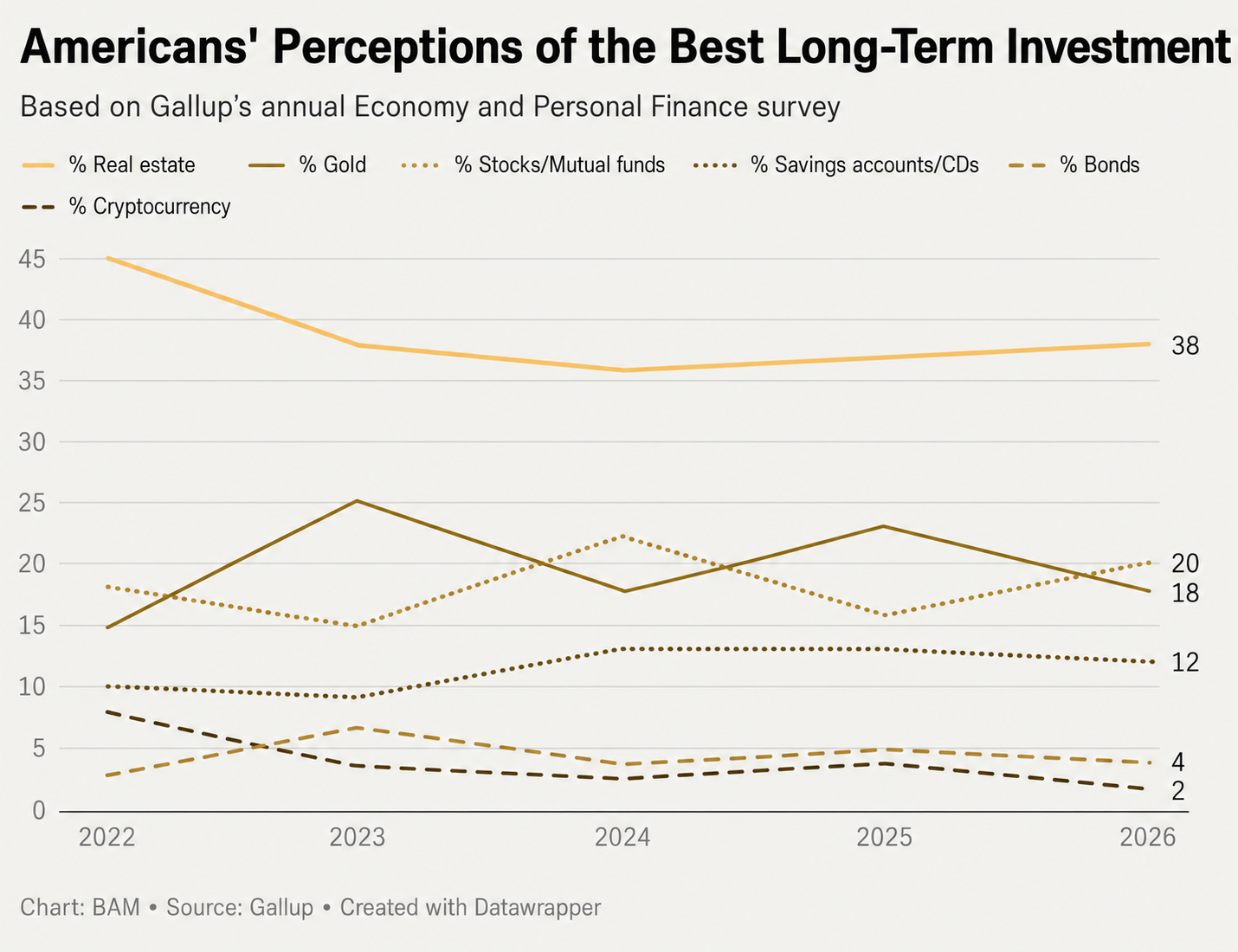
According to Gallup’s latest verified survey, 37% of Americans chose real estate as the best investment for the long run. That placed it comfortably ahead of gold at 23% and stocks or mutual funds at 16%. It was also the 12th consecutive year that real estate held the top position.
That does not mean buying a home is automatically the right financial decision for everyone. But it does tell us something important: even during periods of economic uncertainty, changing mortgage rates and stock market volatility, Americans continue to see lasting value in owning property.
For Florida homebuyers and sellers, especially here in Brevard County, it is worth exploring why that confidence remains so strong.
What Americans Consider the Best Long-Term Investment
Gallup regularly asks Americans to choose the investment they believe is best over time. In its 2025 survey, respondents answered:
Real estate: 37%
Gold: 23%
Stocks or mutual funds: 16%
Savings accounts or CDs: 13%
Bonds: 5%
Cryptocurrency: 4%
Real estate’s lead is especially interesting because it has endured through very different housing markets
.
Over the past decade, homeowners have experienced historically low mortgage rates, rapid price growth, rising interest rates, affordability challenges and periods of limited inventory. Yet real estate has continued to rank first in Americans’ minds.
Why Real Estate Continues To Stand Out
Real estate is different from many other investments because it can provide both financial and personal value.
A stock may increase in price, but you cannot live in it. A savings account may provide security, but it does not give your family a place to gather. A home can potentially appreciate while also becoming part of your everyday life.
(Source: ResiClub)
Imagine walking through the front door of a home that truly fits your needs. You may be building equity each month, but you are also creating a space where birthdays are celebrated, routines take shape and memories are made.
That combination helps explain why so many people continue to view homeownership as a meaningful long-term investment.
Homeownership Can Help You Build Equity
One of the primary financial benefits of owning a home is the opportunity to build equity.
Equity is the difference between your home’s market value and the amount you still owe on your mortgage. It may grow in two ways:
As you make mortgage payments and reduce your loan balance.
As the property increases in value over time.
For example, when you rent, your monthly payment generally helps build equity for the property owner. When you own, a portion of your mortgage payment may help build wealth for your own future.
That does not make renting a poor decision. Renting may be the better option when you need flexibility, are rebuilding your finances or expect to relocate soon. The right choice depends on your timeline and personal circumstances.
However, buyers who plan to remain in one place for several years may find that homeownership offers benefits that extend beyond having a place to live.
What Long-Term Home-Price Growth Tells Us
Real estate does not increase in value in a perfectly straight line. Individual properties and local housing markets can rise, fall or remain flat for periods of time.
Still, the long-term national trend has been positive.
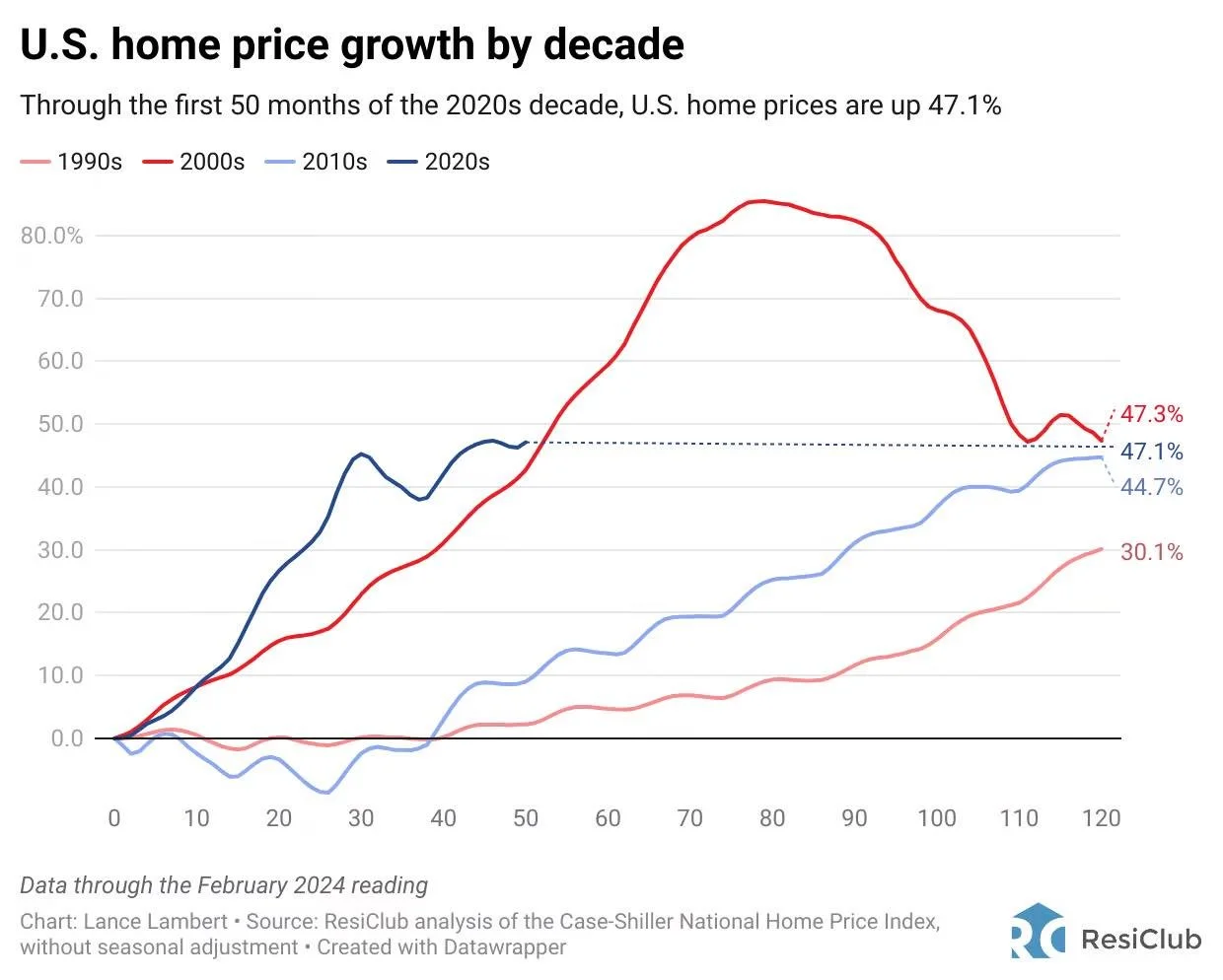
An analysis of the S&P CoreLogic Case-Shiller U.S. National Home Price Index found the following increases by decade:
1990s: 30.1%
2000s: 47.3%
2010s: 44.7%
First 50 months of the 2020s: 47.1%
Even the 2000s, which included the housing crash and Great Recession, ended with national home prices higher than they were at the beginning of the decade.
This does not guarantee that every home will appreciate or that past performance will continue. It does, however, show why real estate is usually better viewed as a long-term asset rather than a quick way to make money.
Is Real Estate Better Than the Stock Market?
Real estate and stocks should not necessarily be viewed as competing choices.
Historically, the stock market has delivered strong long-term returns and offers advantages such as liquidity and easy diversification. Real estate may provide more control, potential leverage, tax considerations, rental-income opportunities and the practical benefit of housing.
Each option also carries risk.
Stocks can experience rapid price swings. Real estate comes with transaction costs, insurance, property taxes, maintenance and repairs. A home can also take time to sell, which makes it less liquid than many financial investments.
For many households, the strongest financial strategy may include more than one type of asset. A homeowner might build equity in a property while also contributing to retirement accounts or other investments.
The better question may not be, “Should I choose real estate or stocks?”
It may be, “How does buying a home fit into my complete financial plan?”
A qualified financial advisor can help you evaluate that question based on your income, savings, risk tolerance and long-term goals.
What This Means for Florida Homebuyers
Florida real estate is made up of many individual markets. Conditions in Miami can look very different from those in Orlando, Jacksonville, Tampa or Brevard County.
Even within Brevard County, the experience of buying a waterfront home in Cocoa Beach may differ from purchasing a newer property in Viera, a family home in Melbourne or a more affordable option in Palm Bay.
That is why buyers should avoid making decisions based only on national headlines.
Before purchasing a Florida home, consider:
How long you expect to own the property
Your monthly payment at today’s mortgage rate
Property taxes, homeowners insurance and possible flood insurance
Homeowners association fees
Maintenance and repair costs
The property’s location and resale potential
Your remaining emergency savings after closing
A home can be a valuable long-term investment, but it should also be a comfortable fit for your life today.
When the payment, location and timeline make sense, you may start to feel more confident moving forward—even when the market is not perfectly predictable.
What This Means for Florida Home Sellers
For sellers, Americans’ continued confidence in real estate is encouraging. Buyers may be cautious about affordability, but many still see homeownership as an important long-term goal.
That does not mean every property will sell quickly or at any asking price.
Today’s buyers tend to pay close attention to condition, insurance costs, monthly payments and value. Homes that are well prepared, accurately priced and effectively marketed are generally in a stronger position to attract serious interest.
If you are considering selling a home in Brevard County, a local market analysis can help you understand:
What comparable homes have recently sold for
How much competition you may face
Which improvements could support your sale
How long similar homes are taking to sell
What proceeds you might expect after selling expenses
Your home may be one of your largest financial assets. Understanding its position in the current local market can help you make decisions with greater clarity.
Is Buying a Florida Home a Good Investment for You?
Real estate may be a good long-term investment when:
You have stable income and manageable debt
You can comfortably afford the complete monthly cost
You expect to remain in the home for several years
You have funds available for maintenance and unexpected expenses
The purchase supports both your lifestyle and financial goals
It may make sense to wait when:
You expect to relocate soon
Buying would use nearly all your available savings
The monthly payment would create financial strain
You are purchasing mainly because you fear missing out
You have not yet considered insurance, taxes or repair costs
The best time to buy is not simply when someone declares that the market has reached the bottom. It is when your finances, plans and the right property come together.
The Bottom Line
Americans have continued to name real estate as the best long-term investment because a home offers something few other assets can: the possibility of building wealth while improving everyday life.
Still, a national survey cannot determine whether a specific home is right for you.
Your decision should be based on your budget, expected ownership timeline, local market conditions and broader financial plan. When those pieces align, real estate can become more than a transaction. It can become a foundation for the future you are working toward.
Thinking about buying or selling a home in Brevard County or another part of Florida? Reach out with your questions. I am always happy to help you understand the market, explore your options and take your next step with confidence.