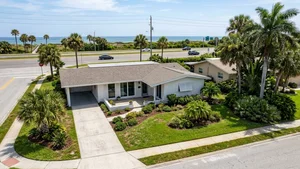
Melbourne sits along Florida's Space Coast, about 72 miles southeast of Orlando. Buyers looking at living in Melbourne today see a market where the median home price hovers around $315,000 and properties stay on the market for roughly 55 days - but the city's roots stretch back well over a century.
Melbourne's history extends past the modern subdivisions to its origins as a small coastal settlement called Crane Creek. From its founding by freedmen after the Civil War to its eventual growth alongside the American space program, the city has a timeline that most people moving here don't expect.
A Look at Melbourne's Early Days and Founding Facts
The area that is now Melbourne was first settled around 1867. Three black freedmen - Peter Wright, Balaam Allen, and Wright Brothers - arrived at the area then known as Crane Creek between 1867 and 1872 to establish a permanent community. White pioneer families, including the Clohecys, Bradleys, and Goodes, followed in the mid-to-late 1870s. The village was officially incorporated on December 22, 1888.
Fast Facts About the City
Melbourne isn't a neighborhood or an unincorporated pocket of the county - it's a principal city, and it anchors the Palm Bay - Melbourne - Titusville Metropolitan Statistical Area.
The local real estate market reflects that status. Recent data shows about 412 available homes for sale, offering roughly 3.6 months of supply for incoming buyers.
Defining Melbourne's Civic Status
The city's borders expanded significantly in 1969 when it merged with Eau Gallie, which had been an independent city on Melbourne's northern side since 1860. That merger created the geographic footprint modern residents recognize today, bringing distinct historic neighborhoods under one municipal government.
Where Melbourne Sits on the Florida Coast
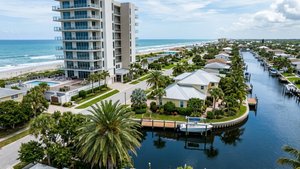
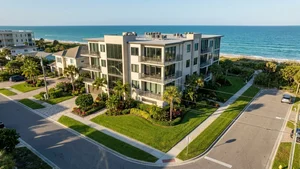
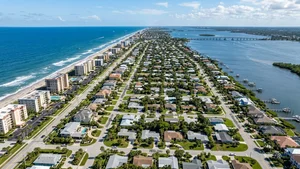
Melbourne is located entirely within Brevard County, Florida, sitting right on the Indian River Lagoon with direct access to the Atlantic coast barrier islands. That position puts it at the center of the region's economic and residential activity - close enough to the beaches to matter, close enough to the mainland commercial hubs to be practical.
Brevard County Boundaries
Buyers sometimes ask whether Melbourne crosses into neighboring counties. It doesn't - strictly Brevard, start to finish. That matters because it means all Melbourne public schools, property taxes, and municipal services fall under Brevard County jurisdictions. And it means property values here track the county's broader trends, with recent homes selling at about 95.6% of their list price.
The Broader Metropolitan Area
The Palm Bay - Melbourne - Titusville MSA encompasses all of Brevard County, with Melbourne serving as one of its primary anchors. That metropolitan designation influences how state and federal infrastructure funding flows into the area, and it accurately describes how people actually live here - residents move regularly between Palm Bay, Melbourne, and the aerospace facilities to the north.
How Melbourne Got Its Name
The community didn't start out with its current name. The earliest settlers called it Crane Creek, after the local waterway. That changed in the late 1870s as the population grew and residents needed both an official post office and a recognized civic identity.
From Crane Creek to Melbourne
The town was officially renamed Melbourne in honor of its first postmaster, Cornthwaite John Hector, who arrived in the Crane Creek settlement in 1878 and helped establish the local mail service. By the time the village incorporated in 1888, the Melbourne name was firmly in place. Crane Creek survives only as a geographical reference now.
The Australian Connection
Cornthwaite John Hector was an Englishman who had spent a significant portion of his life in Melbourne, Victoria, Australia - and he suggested the name as a tribute to his former home. The Australian city itself was named after British Prime Minister William Lamb, the 2nd Viscount Melbourne. So the Florida city's name traces back through Australia directly to 19th-century British politics. It's a longer chain than most people expect.
Historic Landmarks and Local Museums
The Historic Rossetter House Museum and Gardens is one of the most prominent preserved sites in the city. Located in the Eau Gallie area, it offers a direct look at 19th-century life in the region. Downtown Melbourne also has surviving architecture from the city's early development - buildings like the Hotel Melby have been preserved to maintain the historic character of the commercial district.
The Eau Gallie Arts District
Because Eau Gallie operated as its own city from 1860 until 1969, it had time to develop a distinct architectural and cultural identity. Today that area is known as the Eau Gallie Arts District, or EGAD - historic buildings alongside modern murals and galleries, and the primary cultural hub for residents looking for preserved Florida architecture.
Preserved Homes and Museums
Beyond the Rossetter House, Melbourne is home to the Brevard Museum of Art and Science, which covers both local historical artifacts and regional science exhibits. These institutions put real dates and names to the area's transition from pioneer settlement to modern coastal city - the freedmen founders, the pioneer families, the mid-century space boom. It's all documented there.
What Puts Melbourne on the Map Today
Melbourne is widely recognized as a central part of Florida's Space Coast. Its proximity to Cape Canaveral and the Kennedy Space Center shaped its modern economy and population growth in ways you can still see in the housing stock and street layout. The city is also known for the Indian River Lagoon and its beaches, and the Florida Institute of Technology is based here, drawing students and researchers from across the country.
The Space Coast and Local Features
The aerospace industry brought a massive influx of engineers and military personnel to Melbourne in the 1950s and 1960s. That population boom transformed both the housing market and local infrastructure - a lot of what you'll see in older neighborhoods dates directly to that era. The tech and aerospace sectors still anchor the local economy today, and the Indian River Lagoon remains a major recreational draw for residents and visitors alike.
Famous Faces from Melbourne
A few notable figures have real ties to this city. Jim Morrison, the frontman of The Doors, was born in Melbourne on December 8, 1943, while his father was stationed at the local Naval Air Station. And Zora Neale Hurston - the celebrated writer - lived in the Eau Gallie district during two separate periods, first in 1929 and again in the 1950s. Most people who move here don't know either of those facts until well after closing.
Frequently Asked Questions
What are the oldest neighborhoods in Melbourne, FL to look for historic homes?
Eau Gallie is the primary area for historic homes, having been an independent city since 1860 before merging with Melbourne. Historic Downtown Melbourne also features older preserved buildings, though residential inventory in these specific pockets is limited.
Are there special renovation restrictions if I buy a property in Melbourne's historic districts?
Yes, properties located in designated historic areas like the Eau Gallie Arts District typically face local preservation guidelines. Buyers should check with Brevard County and city zoning offices before planning exterior modifications.
Can buyers get local tax exemptions or grants for restoring historic houses in Melbourne?
Some historic preservation programs exist at the state and county levels, but exact availability varies. You should contact the Brevard County property appraiser's office to see if a specific home qualifies for historic tax relief.
How do property values in historic areas like Eau Gallie compare to newer Melbourne developments?
Historic homes often carry a premium due to their unique character and location near the Indian River Lagoon. The median sale price across all of Melbourne is roughly $315,000, but fully restored homes in historic districts can price higher.
What are the most common inspection pitfalls when buying a 1920s or mid-century home in Melbourne?
Older homes in coastal Florida frequently have outdated plumbing, aging electrical panels, and roofs that may not meet current hurricane codes. An inspector will also look closely at the foundation, given the proximity to the Indian River Lagoon.
How does the historical merger of Eau Gallie and Melbourne affect current property zoning and addresses?
The 1969 merger brought Eau Gallie under Melbourne's municipal government, meaning all zoning is now handled by the City of Melbourne. The Eau Gallie name is still used informally for neighborhoods and the local arts district, though.