When you move to Melbourne, understanding the local transportation landscape is just as important as finding the right property. Situated right on the Space Coast, this coastal city relies heavily on a mix of major highways, local transit systems, and scenic causeways. Navigating Brevard County requires knowing exactly how long your daily drive will take and what alternatives exist.
Whether you are commuting to the Kennedy Space Center or looking for a walkable neighborhood near the water, getting around Melbourne FL involves a few distinct regional patterns. Traffic congestion has shifted in recent years as the area continues to grow, making route planning essential for a smooth morning routine. This guide breaks down the driving routes, public transportation options, and pedestrian pathways you will use every day.
Driving and Commuting in Melbourne, FL
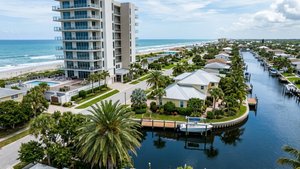
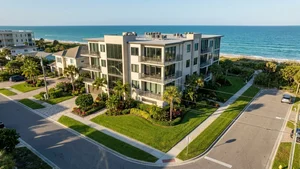
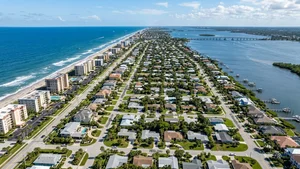
Most residents rely on a personal vehicle to navigate the city and the broader Brevard County region. The primary north-south arteries are Interstate 95 on the western edge and US Highway 1 running directly through the center of town. For coastal access and trips to Cocoa Beach, drivers typically take Highway A1A, which offers scenic ocean views along the barrier island.
Peak hours can bring noticeable traffic congestion, especially on major east-west corridors like Palm Bay Road and the various causeways. The Pineda Causeway and the Eau Gallie Causeway are critical links crossing the Indian River, and they frequently slow down during morning and late afternoon rush hours. Buyers should always test their specific commute during these peak windows rather than relying on midday GPS estimates.
Commuting to major employment hubs requires factoring in consistent highway miles. A drive to the aerospace facilities near Cape Canaveral generally takes 40 to 50 minutes to cover the 25 to 30 miles. Meanwhile, those commuting to Orlando can expect a 70 to 75-minute drive spanning roughly 60 to 70 miles, depending on exact start and end points.
Space Coast Area Transit (321 Transit) Options
For residents interested in public transportation, the Space Coast Area Transit system provides extensive bus coverage throughout the region. This network connects West Melbourne, the barrier islands, and the main commercial districts along the mainland. It is a highly practical option for navigating around Melbourne without a car, especially for those who live near major commercial corridors.
The City of Melbourne actually subsidizes rides for residents living strictly within the city limits. By showing a valid local ID, passengers can ride routes 21, 24, and 29 completely free of charge. This is a massive financial benefit that buyers should consider when deciding exactly where to purchase a home in the area.
For everyday riders outside those free zones, standard public transit fares remain highly accessible. A typical one-ride fare costs about $1.50, and riders can easily manage passes using the Token Transit mobile app. Additionally, the system provides dedicated paratransit services, and all standard buses are equipped to accommodate mobility devices seamlessly.
Biking and Walkability in Melbourne
While the broader Space Coast is largely car-dependent, specific pockets of Melbourne offer excellent pedestrian accessibility. Downtown Historic Melbourne features a dense, highly walkable grid filled with local dining, retail, and entertainment venues. Residents in this immediate area can easily accomplish daily errands on foot thanks to well-maintained sidewalk infrastructure and slower speed limits.
Just a short distance north, the Eau Gallie Arts District provides another pedestrian-friendly environment with tree-lined streets and accessible local galleries. If walkability is a top priority for your move to Melbourne, focusing your property search near these two historic hubs is the smartest strategy. Outside of these districts, navigating entirely on foot becomes more challenging due to wider roads and longer distances between commercial centers.
Cyclists will find several dedicated paths and recreational trails integrated into the city layout. The Brevard Zoo Linear Park features a fully paved 3-mile trail that is completely separated from vehicle traffic. This provides a protected route for both casual biking and daily exercise without having to navigate active roadways.
Airport Accessibility from Melbourne
Frequent travelers will find that Melbourne offers distinct advantages when it comes to airport proximity. Melbourne Orlando International Airport is located directly within the city, sitting just about 1.5 miles from the downtown district. This translates to an incredibly brief 5 to 10-minute drive, making it one of the most convenient local airports in the state.
For broader international flight options, residents typically utilize Orlando International Airport. This major hub is located roughly 60 to 70 miles away, and the drive generally takes just over an hour under normal highway conditions. Having both a hyper-local terminal and a massive international hub within driving distance offers excellent flexibility.
Getting to either airport without a personal vehicle is straightforward. Local shuttle companies operate daily routes between Melbourne and the Orlando terminals, while Uber and other ridesharing company options are readily available for quick trips to the local runways. The sheer convenience of the local airport often becomes a major selling point for out-of-state buyers.
Frequently Asked Questions
How do you get around Melbourne, FL without a car?
Navigating the area without a vehicle involves combining the Space Coast Area Transit bus system with rideshare services. Walkable neighborhoods like the Eau Gallie Arts District and Downtown Historic Melbourne allow residents to handle daily errands on foot. For longer trips, local shuttle services and extensive sidewalk networks provide reliable alternatives.
Is there Uber or other rideshare services in Melbourne?
Yes, Uber and Lyft operate extensively throughout Melbourne and the surrounding Brevard County areas. These services are particularly popular for evening trips to Cocoa Beach or quick transfers to the local airport. Wait times are generally under 10 minutes in the central commercial districts.
What are the costs and fares for public transportation in Melbourne, FL?
A standard single ride on the local bus network costs approximately $1.50. However, residents living within the City of Melbourne limits can ride routes 21, 24, and 29 for free by showing a valid local ID. Frequent riders can also purchase discounted monthly passes through the Token Transit app.