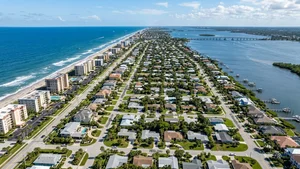
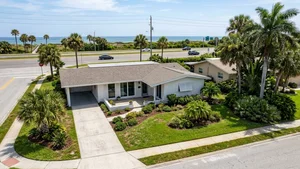
The Indian River Lagoon sits between them, but for buyers considering living in Melbourne, FL, the mainland and Melbourne Beach might as well be two different worlds. One is a mainland city with subdivisions, highways, and a full commercial infrastructure. The other is a barrier island where the Atlantic is your backyard and the trade-offs start with your insurance bill. Both are in Brevard County. Both are within a few miles of each other. But choosing between them will change your budget, your property type, and the rhythm of your daily life in ways that go well beyond the drive across the Melbourne Causeway.
Real Estate Prices and Market Trends
Start with the numbers, because they tell the story quickly. Mainland Melbourne carries a median sale price of roughly $315,000, with around 412 homes available and properties sitting on the market for about 55 days. That's a real window - enough time to look, compare, and think.
Cross the causeway and the math changes fast. Limited land and immediate water access push barrier island prices into a different category entirely.
Mainland Home Prices
The average list price per square foot on the mainland runs $208 to $238, and the current sale-to-list ratio is around 95.6%. There's some room to negotiate, though homes priced well don't linger.
Coastal Property Costs
Melbourne Beach trades at a different level. Median sale prices range from $499,000 to $650,000, with typical home values averaging around $628,353. Per square foot, you're looking at $397 to $460. Indialantic, just up the island, carries the same kind of coastal premium for the same geographic reason - there's only so much land between the ocean and the lagoon.
Property Types and Architecture
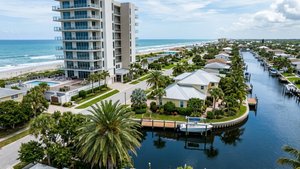
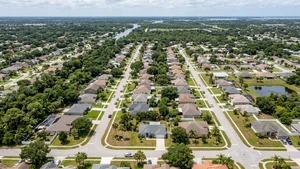
What gets built somewhere is shaped by what the land allows. On the mainland, that means large subdivisions, established neighborhoods with mature trees, and wide streets. On the barrier island, you've got a narrow strip squeezed between the Atlantic and the Indian River Lagoon, and the housing stock reflects it.
Housing on the Mainland
Single-family homes, townhouses, and inland condominiums make up the bulk of the mainland inventory. If you want a larger lot, a property without a homeowners association, or new construction, this is where you'll find your options. Developers still have room to build here - unlike the coastal strips, which are effectively built out.
Barrier Island Real Estate
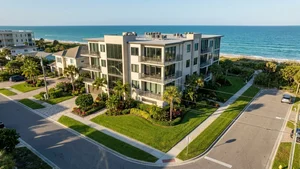
Melbourne Beach and its neighbors concentrate their inventory around oceanfront condos and waterfront estates designed to make the most of Atlantic and lagoon views. Single-family homes exist, but lots are smaller. Density is higher. That's not a complaint - it's just the geometry of a barrier island.
Insurance and Maintenance Considerations
Brevard County carries a high flood risk. That's true on the mainland, and it's more acute on the coast. Budget for it before you fall in love with a specific address.
The insurance conversation is only part of it. Coastal homes also take a beating from the environment in ways that inland homes don't.
Flood Insurance Requirements
Florida's average National Flood Insurance Program (NFIP) policy runs $853 to $938 per year, depending on the property's elevation and flood zone designation. If your lender requires flood insurance - and in a high-risk zone, they will - you need to know that number before you know what your actual monthly payment looks like. Get quotes early.
Coastal Maintenance
Saltwater air corrodes metal fixtures, HVAC systems, and exterior paint faster than you'd expect if you're coming from inland. Impact-resistant windows and reinforced roofs are standard on barrier island homes for good reason - they protect against storms and can bring insurance premiums down. Factor in the ongoing upkeep when you're running the numbers on a coastal property.
Lifestyle and Local Amenities
Melbourne is the commercial engine for this part of Brevard County. Major employers, medical facilities, big-box retail, and direct access to I-95 - it's all on the mainland. The barrier island trades that infrastructure for something quieter and more water-focused.
Neither one is better. They're just built around different priorities.
Everyday Convenience in Melbourne
If your day involves a hospital, a highway, or a hardware store, the mainland makes that easier. The commercial activity and commuting infrastructure are concentrated here, and that's not going to change.
Access to Coastal Recreation
Melbourne Beach, Indialantic, Satellite Beach, and Cocoa Beach form a continuous run of Atlantic coastline. Surfing, boating, beachcombing - it's all right there. The trade-off is that anything inland takes longer to reach. Crossing the Melbourne Causeway adds real distance to your errands and your commute, and that adds up over time.
Frequently Asked Questions
How much more expensive is real estate in Melbourne Beach compared to mainland Melbourne, FL?
Mainland Melbourne has a median sale price around $315,000. Melbourne Beach sees median prices between $499,000 and $650,000. You're paying for coastal proximity and the fact that there isn't much island left to build on.
How do hurricane risk and homeowners insurance costs compare between Melbourne and Melbourne Beach?
Both areas carry storm risk - Brevard County has high flood risk across the board - but barrier island properties face more direct coastal exposure and typically higher insurance costs. Statewide, NFIP flood policies average $853 to $938 annually. Coastal homes also have to meet stricter wind mitigation standards.
What are the main lifestyle differences between living on the mainland in Melbourne versus the barrier island?
The mainland puts you close to major retail, highways, and employers. The barrier island puts you close to the Atlantic and the Indian River Lagoon, in a quieter environment built around outdoor recreation. The two are genuinely different ways of living.
How does living in Melbourne Beach affect daily commute times to major employers on the Melbourne mainland?
You're crossing the Indian River Lagoon via the Melbourne Causeway every time you head to work on the mainland. Drive it during rush hour before you commit - the only way to know how it actually feels is to do it yourself.
Are there different rules for short-term vacation rentals and Airbnbs in Melbourne Beach versus the City of Melbourne?
Yes. Zoning rules change at the municipal line, and the City of Melbourne and the town of Melbourne Beach each regulate short-term rentals on their own terms. Check the specific local ordinances for whichever address you're considering.
Do homes typically sell faster on the mainland in Melbourne or over the bridge in Melbourne Beach?
Mainland Melbourne homes are currently averaging about 55 days on market. Coastal properties run on their own timeline, driven by luxury buyer demand and limited inventory. Ask your agent for current days-on-market figures for the specific island neighborhoods you're looking at.